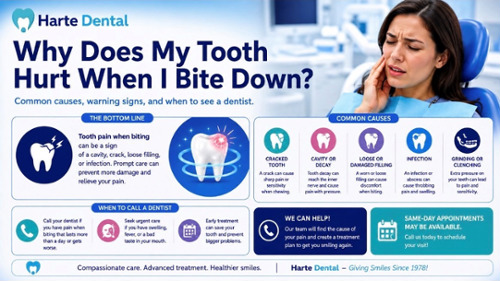
Have you ever bitten into a sandwich, chewed something crunchy, or simply closed your teeth together and felt a sudden sharp pain?
Tooth pain when biting down is a common dental complaint, and it shouldn't be ignored.
Sometimes the cause is relatively simple, such as a filling that needs an adjustment. Other times, pain when chewing may be a sign of a cracked tooth, cavity, infection, or inflammation around the tooth's root.
At Harte Dental in Milton, Massachusetts, we help patients identify what's causing their tooth pain and recommend treatment to protect their oral health.
7 Reasons Your Tooth May Hurt When You Bite Down
1. A Cracked Tooth
One of the most common reasons for sharp pain when biting or chewing is a cracked tooth.
A tooth can develop a crack from biting something hard, grinding your teeth, an injury, or years of repeated chewing forces.
Common signs of a cracked tooth include:
-
Sharp pain when biting into food
-
Pain when releasing your bite
-
Sensitivity to hot or cold temperatures
-
Pain that comes and goes
-
Difficulty identifying exactly which tooth hurts
Some cracks are so small they are difficult to see, even during a dental examination.
Treatment: Depending on the location and severity of the crack, your dentist may recommend bonding, a dental crown, root canal treatment, or another procedure. Some severely cracked teeth cannot be saved.
2. A Cavity or Tooth Decay
Cavities don't always cause pain, especially when they're small.
However, as tooth decay progresses deeper into the tooth, it can cause sensitivity or discomfort when pressure is applied.
You may also experience sensitivity to sweets, cold drinks, or hot foods.
Treatment: A dental filling may be sufficient for a smaller cavity. More extensive decay may require a crown, root canal treatment, or occasionally extraction.
Early diagnosis often allows for more conservative treatment.
3. A Loose, Broken, or High Filling
If you've recently had a dental filling and notice pain when biting down, your bite may need an adjustment.
Sometimes a new filling sits slightly higher than the surrounding teeth, causing that tooth to absorb more pressure when you chew.
Older fillings can also become worn, cracked, or loose.
Treatment: Your dentist can check your bite and determine whether the filling needs an adjustment, repair, or replacement.
4. Infection or Abscess Around the Tooth Root
A tooth infection can develop when bacteria reach the dental pulp, the tissue containing nerves and blood vessels inside the tooth.
Infection and inflammation around the root can make the tooth extremely sensitive to pressure.
Possible symptoms include:
-
Pain when biting or chewing
-
Persistent or throbbing toothache
-
Swelling around the gums
-
A pimple-like bump on the gum
-
An unpleasant taste or drainage
-
Fever in some cases
Treatment: An infected tooth may require root canal treatment or extraction, depending on its condition.
Dental infections should be evaluated promptly because they can spread to surrounding tissues.
5. Gum Disease or Inflammation Around the Tooth
Sometimes the discomfort isn't coming from inside the tooth.
Inflamed gums, periodontal disease, or problems with the tissues supporting a tooth can cause tenderness when chewing.
Signs may include bleeding gums, swelling, gum recession, or teeth that feel loose.
Treatment: Depending on the diagnosis, treatment may involve professional cleaning, scaling and root planing, or other periodontal care.
6. Teeth Grinding or Clenching
Do you wake up with sore teeth or a tired jaw?
Grinding or clenching your teeth, also known as bruxism, can place excessive pressure on your teeth and the tissues supporting them.
This may lead to tooth tenderness, sensitivity, cracks, and jaw discomfort.
Treatment: Your dentist may recommend a custom nightguard, evaluate your bite, or discuss ways to manage contributing factors.
7. Inflammation Around the Tooth Root
Each tooth is supported by tissues that help absorb pressure when you chew.
These tissues include the periodontal ligament, which connects the tooth root to the surrounding bone.
When this ligament becomes inflamed or irritated, the tooth may feel sore when you bite down.
This can occur with trauma, excessive bite forces, infection, or other dental conditions.
Treatment: Your dentist must first identify the underlying cause before recommending treatment.
Why Does My Tooth Hurt When I Bite Down but Not All the Time?
Intermittent tooth pain can occur with cracked teeth, bite-related problems, and other dental conditions.
For example, a small crack may only cause discomfort when you chew at a particular angle or bite into certain foods.
The fact that pain comes and goes does not necessarily mean the problem is resolving.
If you repeatedly experience discomfort while chewing, schedule a dental evaluation.
Why Does My Tooth Hurt When I Release My Bite?
Pain when releasing biting pressure is a symptom sometimes associated with a cracked tooth.
When pressure is applied, sections of a cracked tooth may move slightly. Releasing that pressure can irritate the sensitive tissues inside the tooth.
However, this symptom alone cannot confirm a crack. A dentist may use bite tests, examination, and imaging to help identify the cause.
Why Does My Tooth Hurt When I Bite Down but Not When I Drink Something Cold?
Pain that occurs only when chewing may indicate a problem involving biting pressure, such as a cracked tooth, a high filling, or inflammation around the root.
However, the absence of temperature sensitivity does not rule out decay, infection, or other dental problems.
A dental examination is the best way to determine what's happening.
Can Tooth Pain When Chewing Go Away on Its Own?
Sometimes temporary irritation can improve, but recurring pain when biting should not be ignored.
A cracked tooth will not repair itself, and an untreated cavity generally continues to damage tooth structure.
Pain may even temporarily disappear when the nerve inside a severely damaged tooth stops responding, despite an underlying problem remaining.
Don't use the absence of pain as proof that your tooth is healthy.
What Should I Do If My Tooth Hurts When I Bite Down?
Until your dentist can examine the tooth:
-
Avoid chewing hard or crunchy foods on the painful side.
-
Choose softer foods when possible.
-
Maintain gentle brushing and flossing.
-
Avoid testing the tooth repeatedly by biting on it.
-
Consider an over-the-counter pain reliever if you can safely take it and follow its label directions.
-
Schedule a dental examination, especially if the pain persists or returns.
Do not place aspirin directly against your gums or attempt to repair a broken tooth with household glue.
Seek urgent dental evaluation for severe or worsening pain, swelling, fever, or signs of infection. If you develop difficulty breathing or swallowing, or rapidly spreading facial swelling, seek emergency medical care immediately.
How Does a Dentist Diagnose Pain When Biting?
At Harte Dental, identifying the source of tooth pain begins with understanding your symptoms.
Your dentist may:
-
Examine the tooth for cracks, decay, or damaged restorations.
-
Evaluate your bite and chewing pressure.
-
Test the tooth's response to temperature or pressure.
-
Examine the surrounding gums.
-
Take dental X-rays when appropriate.
-
Recommend additional testing or specialist evaluation if the cause remains unclear.
Not every crack is visible on an X-ray, so clinical examination and your description of the symptoms are especially important.
The goal is to identify the cause before recommending treatment.
Frequently Asked Questions About Tooth Pain When Biting
Is tooth pain when biting always a cavity?
No. Tooth pain when chewing can also be caused by cracked teeth, damaged fillings, gum inflammation, infections, teeth grinding, or bite-related problems.
Can a cracked tooth hurt only when chewing?
Yes. Some cracked teeth produce sharp, intermittent pain when pressure is applied or released, even when there is little or no discomfort at other times.
Do I need a root canal if my tooth hurts when I bite?
Not necessarily. Root canal treatment is recommended for certain conditions involving the tooth's pulp, including some cases of infection or irreversible inflammation. Other causes of biting pain may require a filling, crown, bite adjustment, or different treatment.
Is pain when biting a dental emergency?
It can be. Severe pain, swelling, trauma, or signs of infection warrant prompt evaluation. Even mild recurring pain should be checked before the underlying problem potentially becomes worse.
Why does my tooth hurt after getting a crown?
A newly crowned tooth may experience temporary sensitivity, but pain when biting can also indicate a bite issue, inflammation, or another problem requiring evaluation. Contact your dentist if discomfort persists or worsens.
Tooth Pain When Biting? Visit Harte Dental in Milton, MA
Whether your tooth hurts when chewing, biting into something crunchy, or releasing pressure, it's important to understand why.
At Harte Dental, we've been Giving Smiles Since 1978! Our family dental practice provides preventive, restorative, and emergency dental care for patients in Milton and surrounding South Shore and Greater Boston communities.
We offer dental fillings, crowns, emergency dental evaluations, and other restorative treatments designed to help preserve your natural teeth whenever possible.
Experiencing tooth pain when you bite down?
Contact Harte Dental in Milton, MA, to schedule an appointment. We are accepting new patients and make every effort to accommodate urgent dental concerns.
Giving Smiles Since 1978!